The chile chase was literally in ruins... the ruins of great Mayan and Toltec cities. A recent chile addition to the collection came from Palenque itself, where "managed" wild chiles grow in the shadows of temples constructed over 1500 years ago.
Here is a photo of the largest plant we found - just along the edge of the forest in moderate shade. This one was clearly saved from "weeding" by the grounds crew. When we asked about this, it was clear that the useful plants were maintained - there were avocado trees, orange trees and several pepper plants that the vendors (selling souvenirs, etc) knew about and would harvest from.
Here, Kraig is kneeling at the site of a small chile plant at the base of a small temple.
...and here's a close up of the plant itself. While it is the same species found in other places in Mexico (see previous post on chile pequins) it has a different local name, tepenchil.
Of course, chile hunting at Palenque was a bonus. We were there to learn about the amazing history of the region and take in the sights! Here is the famous temple of the inscriptions in Palenque. When we arrived in the morning, howler monkeys provided a loud and very boisterous soundtrack for our wanderings. While on the chase in Mexico, we are often obligated to stop by at some of Mexico's famous roadside attractions. In comparison to those found in the United States, those in Mexico are invariably more historic, more grandiose in construction and more photogenic! I will share a few of the best photos from these paradas:
This was the first one - El Tajín en Veracruz - a Totonac (Tutunakú) word that means thunder, this is a major ruins site on the central East Coast. Pictured is the temple of the niches - which has 365 niches around its facade.
Here is the El Castillo temple in Chichén Itzá - where on the spring and fall equinox, the light casts a shadow along the staircase that forms the shape of a serpent.
Here is the Toltec/Mayan port town of Tulum, on the Caribbean coast.
We'll leave you with a shot of one of the most impressive temples - the top of the largest pyramid in Uxmal - 12 Mini Chaac-Mul faces line the staircase on its way up to the central Chaac face at the top of the temple. The structure at the top is meant to mimic the face of Chaak Mool (the all important the rain god) - you can see the two eyes, the nose (broken off) and the gaping mouth, in which sacrafices were practiced...
Showing posts with label ruins. Show all posts
Showing posts with label ruins. Show all posts
Monday, October 29, 2007
The chile chase is in ruins!!


Thursday, October 18, 2007
Papantla: El Tajin and Vanilla
After picking Heather up at the Monterrey airport on Monday morning, the chile chase continues…with my favorite co-pilot!
Monday night we crashed in Tamulipas and Tuesday we got the good news that we will be able to meet up with another chile researcher in Merida, in the Yucatan. This region has a very distinct environment and represents an area from which we do not have any samples. There will also be the possibility of seeing wild habaneros, which belong to a different species than that of the chile pequin.
But first we have to get through Veracruz. While I did some collecting from Veracruz last year, I did not get to explore the region as much as I wanted to. I especially wanted to stop in Papantla, which is not only located near some famous Totonac (Tutunaku in the native language) ruins, El Tajín, but is also the unofficial center or home of vanilla production in Mexico. Of the two attractions, we were really excited to learn about vanilla.
We made a cursory visit to the ruins of El Tajín, of which the following temple is the most famous, the temple of the niches – there were 365 niches around this temple, which obviously had some relationship with the solar calendar – but nearly half of the grounds were closed due to repairs of damage caused by Hurricane Felix which passed through a few weeks ago.

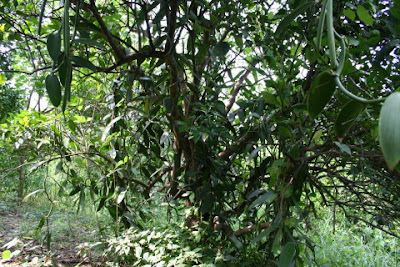
The vanilla bean is the fermented and dried seed pod from the vanilla orchid, the only orchid that is used and cultivated for human consumption. Vanilla is a crop that originates in this region – the Tutunako people and their ancestors began harvesting the pods thousands of years ago, when it was for the exclusive use of emperors, priests and for offerings to the gods. This has not changed much – most of the vanilla sold in town was purely synthetic and we did not see bottles of real vanilla for sale in town. Much of the production is sent overseas. Here is a picture of the orchid with pods that are not quite ripe.

The orchid is grown under shade (provided by a tree or provided by a shade cloth), and is pollinated by hand. Once the fruit ripens, they are often sold to a middleman, which then ferments and dries the beans, a process which may take up to 3 months. The next picture is a shade house where solely vanilla is cultivated.

The production chain of vanilla mirrors that of coffee – where the producers hand off their raw product to middlemen, who then process the fresh vanilla pod into the dried vanilla bean. This vanilla bean can then be utilized in a number of added value final products, such as extracts, oils, pharmaceutical and beauty product ingredients. The producers are trying to find ways to keep more of the added value dollar, but as far as they’ve gotten is reviving the traditional craft of creating figurines from the vanilla pods. We have one on our rearview mirror – its so pungent it over powers the chile scent in the cab! And to answer your final question, yes we did buy some vanilla. One Kilogram of “A” quality pods – about 7 inches long. Expect some for Xmas if you write.

We observed a number of production systems - the most integrated was this intercrop with citrus, which occupies the most acreage in the area. The producer plants up to four vanilla orchids under each citrus tree and the tree provides shade and serves as a scaffold for the vanilla orchid.

The production chain of vanilla mirrors that of coffee – where the producers hand off their raw product to middlemen, who then process the fresh vanilla pod into the dried vanilla bean. This vanilla bean can then be utilized in a number of added value final products, such as extracts, oils, pharmaceutical and beauty product ingredients. The producers are trying to find ways to keep more of the added value dollar, but as far as they’ve gotten is reviving the traditional craft of creating figurines from the vanilla pods. We have one on our rearview mirror – its so pungent it over powers the chile scent in the cab! And to answer your final question, yes we did buy some vanilla. One Kilogram of “A” quality pods – about 7 inches long. Expect some for Xmas if you write.

Here is Kraig, with his kilo of booty in front of the office of CoVer Vainilla. From right, Luis (extensionist), Kraig, Javier holding a vanilla orchid (president of a producer organization), and another CoVer Vainilla employee.
Subscribe to:
Posts (Atom)

